
 October 30, 2026
Filament Shelf Life: Reading Dates, Rotating Stock
Filament has no expiry date; it has storage conditions. This guide shows distributors how to read spool age from lot markings, run a first-in-first-out policy, test old stock before it costs a customer, and set a written rotation threshold.
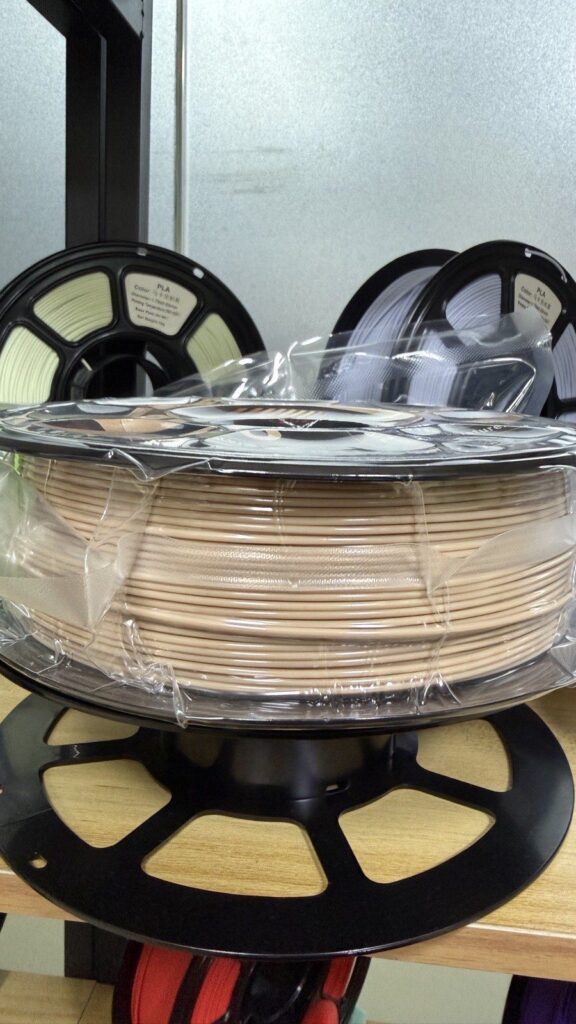
Filament does not spoil like milk. There is no expiry date printed on the spool that suddenly makes it useless. What ages filament is water, heat and time spent open to air. A sealed spool stored dry behaves very differently from the same spool sitting on a shelf for a summer.
Yet most quotes and TDS documents treat shelf life as one line in a table. This guide turns that line into a working policy: how to read the age of your stock, how to rotate it, and what to do before the old spools cost you a customer.
Table of Contents
What Does Shelf Life Actually Mean for Filament?
PLA and PETG are thermoplastics. The polymer itself does not rot. What changes over time is mostly water content and, slowly, some surface chemistry. Wet filament prints badly: bubbles, stringing, brittleness. Dry filament prints the way it always did.
So the honest answer to “how long does filament last” is: it depends on how it was packed and where it sat. A spool that left the factory sealed, with moisture protection confirmed in the quote, can sit for a long time and still print like new. The same spool opened, used halfway and left on a printer for months will disappoint you.
This is why the “shelf life” line in a spec sheet deserves a question, not a nod. When a supplier states a shelf life, ask what it assumes. Sealed? Stored below a certain temperature? Away from sunlight? The number only means something with its conditions attached. Our filament range pages carry the storage conditions each material expects, and the technical data sheet states them per series.
How Do You Read a Spool’s Age?
You cannot manage stock age you cannot see. So the first working step is simple: make the age visible.
Ask your supplier how the production date or lot reference is marked on the spool or box. Some print it plainly. Some encode it in a lot number. Some only put it on the carton. If the answer is “it is not marked”, that is a finding in itself, and worth raising before the next order, because every other part of traceability starts there.
Then record it when stock arrives. A one-line entry per carton is enough: date received, lot reference, quantity. Five minutes at the dock saves an argument later. The same lot reference is what you would quote back in a quality claim, so treating it as inventory data now costs nothing and pays twice.
How Does Storage Change the Answer?
Two spools made the same week can be in completely different condition a year later. The difference is almost always storage. Heat and moisture do the damage; the calendar just keeps score.
- Sealed and dry: the spool ages slowly. This is the state your supplier shipped it in, and the packing specification in your quote is what protects it, as we covered in the packing spec guide.
- Sealed, bad warehouse: a hot room or a damp corner works on the spool through the packaging. Sealed does not mean immortal.
- Opened and idle: the clock runs fast. Once a spool is open, dry-box storage or a resealed bag with desiccant slows the decline.
The practical test is not the date. It is a short test print. If an older sealed spool prints clean at its normal settings, it is fine. If it bubbles or strings where it never used to, it has taken on water, whatever the date says. Age is a reason to check, not a verdict by itself.
What Should a Distributor’s Rotation Policy Look Like?
First in, first out. You have heard it before. The hard part is that customers order colours unevenly, so some SKUs move fast and some sit. A policy helps exactly there.
| Stock state | Action | Why |
|---|---|---|
| New arrival | Log date and lot; shelve behind newer stock | Rotation starts at receiving, not at picking |
| Moving SKU | Normal FIFO picking | Sells before age matters |
| Slow colour, sealed | Check on a schedule; keep dry and cool | Sealed stock ages slowly, but nobody looks at shelves they never pick from |
| Opened shelf spool (display or test) | Do not sell as new; dry-store it | An opened spool is not the product you were paid for |
| Older than your comfort threshold | Test print before sale; discount or bundle if dull | Sell honesty, not returns |
Pick a threshold you can defend to your own customers. It does not need to be public. It needs to exist, so that “should we still sell this?” has an answer before a customer forces the question.
Does the Material Change the Policy?
A little, and mostly at the edges. The rotation policy stays the same for everything you stock: log, rotate, check the slow movers. What changes is how nervous you should be about a spool that sat too long.
PLA sits in the middle of the sensitivity scale. It takes on water steadily but forgivingly, and a drying cycle usually brings an aged spool back to printable condition. PETG is a touch less fussy in storage, though neither material enjoys a damp warehouse. The materials that punish neglect are the thirsty ones — nylons, flexibles, PVA-style support materials — which is why our range keeps the focus on PLA, PLA+ and PETG, where sealed storage plus FIFO gets the job done.
The practical read: if you stock only the common print materials, one simple policy covers everything. The moment you add specialised polymers, give them their own storage rules and their own, shorter, patience threshold — the technical data sheet for each series is where those conditions live.
What Do You Do With Stock That Got Old?
Old stock is not dead stock until you have checked it. The sequence is short.
First, test print from the oldest cartons of each slow SKU. Same model, same settings as always. Clean print? The stock is fine; rotate it forward and move on. Bubbles, snapping or stringing? You have wet filament, and now you know before your customer does.
Second, for spools that matter commercially, you can go one step further and ask for a mechanical check against a published test method, such as tensile testing to ISO 527-1. That is the same standard-language approach our quality control pages apply to incoming material, just pointed at your own shelf.
Third, decide with eyes open. Tested-clean older stock can be sold, discounted or bundled as honest value. Failed stock becomes a supplier conversation, backed by the lot reference you logged at receiving. None of those decisions is available to a distributor who never looked.
True or False: Filament Age Beliefs
True or False: Filament has a fixed expiry date, like food.
False. Age is a proxy. Water uptake and heat do the damage. A dry sealed spool far outperforms a fresh one stored badly.
True or False: If the spool is still sealed, age does not matter.
False. Sealed slows ageing a great deal; it does not stop it, and a hot or damp warehouse works through packaging. Old sealed stock still deserves a test print.
True or False: Old stock that fails a test print should be binned quietly.
False. A failed spool with a logged lot reference is evidence. Raise it with the supplier the way you would any quality claim, and let the pattern inform your next order.
FAQ
How long does PLA filament actually last?
There is no single honest number. It depends on packing, storage temperature and humidity. Sealed, dry and cool lasts far longer than most people fear; opened and neglected fails far sooner. A test print tells you more than the calendar.
Where do I find the production date on a spool?
It varies by factory: printed date, lot code, or carton label only. Ask your supplier how it is marked. If age is not marked anywhere, ask for it on the next order, since traceability starts with it.
Should I dry spools before selling or using older stock?
Drying can restore processability to spools that took on moisture, using the drying conditions in the material’s technical data sheet. Test print first, so you know whether it is needed at all.
What is a good stock rotation rule for a small distributor?
Log lot and date at receiving, pick first-in-first-out, and schedule a look at any sealed SKU that has not moved in a long while. The rule matters less than writing it down.
Conclusion
Filament shelf life is a storage story wearing a date costume. Make the age visible by logging lots at receiving. Rotate first-in-first-out, with a written threshold for the slow colours. Test print anything that sat too long, and let the result, not the date, decide. Distributors who do this rarely get surprised by their own shelves, and their customers never see the difference.
Tell us the material, volume, packaging and destination — we reply within 12 hours. Reference MOQ from 100+ spools (≈100 kg) for standard colors.
Discuss Your Project