
 October 29, 2026
Filament Packing Spec: What to Put in the Quote | FilaSource
Moisture damage in transit is a packing problem, not a luck problem. This guide lists the packing specification to put in a filament quote — spool sealing, box format, carton and pallet math — and the four checks that verify it at incoming inspection.
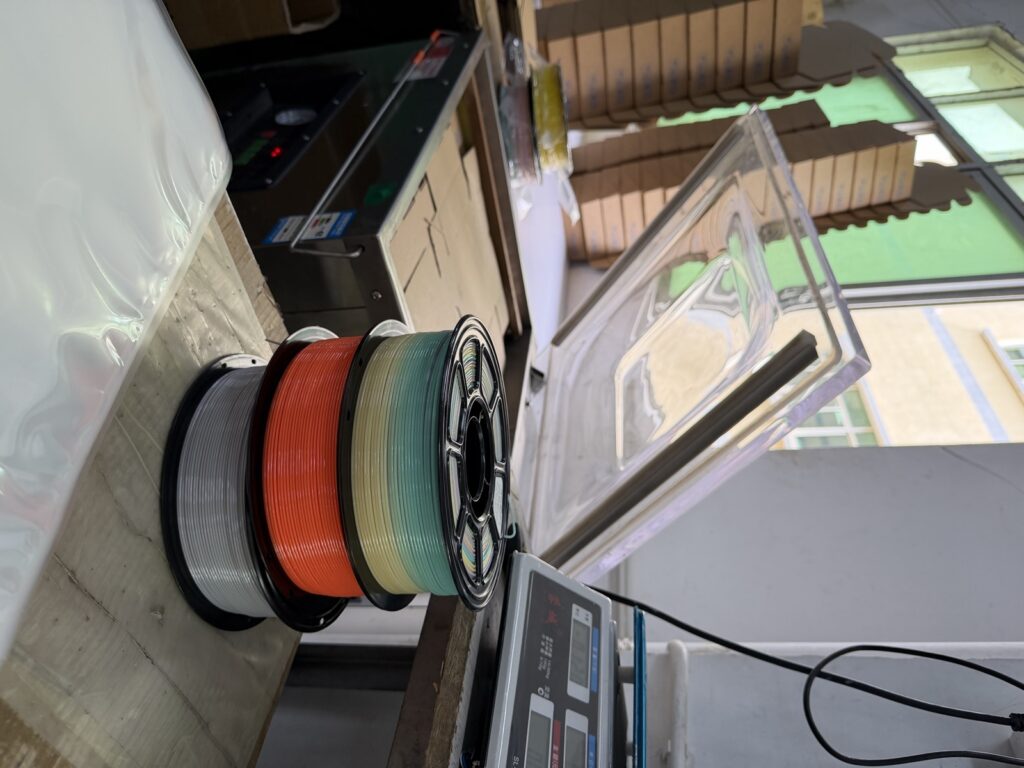
Filament that arrives wet was almost always packed wet, shipped wet, or stored wet — and the buyer finds out at the printer, weeks after the container was opened. The fix is not luck or a better forwarder. It is a packing specification written into the quote before the order is placed, and verified at incoming inspection after it lands.
This guide lists the packing lines a serious filament quote should carry, the checks that catch a weak packing job on arrival, and the standards you can reference so the specification sounds like a requirement instead of a preference.
Table of Contents
- Why Does Moisture Decide Whether a Filament Order Arrives Usable?
- What Belongs in a Written Packing Specification?
- How Do You Verify Packing Claims at Incoming Inspection?
- Which Standards Can You Reference in the Spec?
- What Does Container Shipping Change?
- True or False: Filament Packing Beliefs
- FAQ
- Conclusion
Why Does Moisture Decide Whether a Filament Order Arrives Usable?
PLA and PETG are hygroscopic: they pull water out of the air from the moment they are wound, and a spool that starts a sea voyage already damp has forty days to get worse. The classic container route makes its own weather — daytime heat in the hold, cold nights, and a condensation cycle that repeats until arrival. Water that condenses on the carton does not stay on the carton.
The failure mode is quiet. A wet batch prints with steam bubbles, stringing and rough surfaces; badly soaked PLA turns brittle enough to snap on the spool. None of that is visible on a pallet photo, and none of it appears in a customs document. It appears three weeks later, on your customer’s printer, as a complaint with your name on it.
That is why packing belongs in the commercial conversation, not the warehouse one. A supplier’s packing method is a specification you buy, like diameter tolerance or the technical data sheet — and like those, it belongs in writing. At FilaSource, moisture protection and box format are confirmed in the quote for exactly this reason: a verbal “we pack it well” cannot be inspected, rejected, or improved on the next order.
What Belongs in a Written Packing Specification?
A packing specification is a short table, not an essay. Each line names a layer, what to require, and what the line protects against. The version below covers what a filament order physically moves through:
| Layer | What the quote should state | What it protects against |
|---|---|---|
| Spool sealing | Sealing method as stated in the quote — only require desiccant if the written quote includes it | The 40 days of container humidity before your dock |
| Box format | Individual box, sleeve, or plain spool — and which SKUs get which | Crushed flanges, scuffed surfaces, retail-ready expectations |
| Export carton | Spools per carton, dimensions, gross weight (10 × 1 kg at 34 × 22.5 × 41.6 cm, roughly 13.1 kg, is the local standard) | Freight misquoting, shelf-plan surprises, pallet re-stacking |
| Pallet pattern | Cartons per layer, layers per pallet, total gross weight | Collapsed corners and crushed bottom cartons |
| Markings | Batch/lot reference if supplied on spool and carton, shipping marks per destination | Untraceable complaints, mixed lots during picking |
Two habits make the table work. First, tie each line to the quote itself — moisture protection and box format are confirmed in the quote, so a deviation on arrival is a commercial issue, not a shrug. Second, keep carton math separate from order minimums: ten spools per carton is how the product physically ships, not a hidden minimum order. When a specification like this is written down, most suppliers simply match it — the trouble only starts when the buyer assumes packing and the supplier assumes price.

How Do You Verify Packing Claims at Incoming Inspection?
A specification nobody checks is a wish. Incoming inspection for packing needs no laboratory — four checks catch most failures in the first hour a pallet is open:
- Seal check on a sample of spools — open one carton from each lot position, confirm the sealing is intact and the desiccant is present where the quote says it is. Photograph what you find, carton label in frame.
- Weigh-in against paperwork — carton gross weight should match the quoted figure. Underweight cartons hint at missing boxes or short counts before anyone unrolls anything.
- Spool condition — flanges round, no crushed edges, filament not visibly loose on the spool. Mechanical damage in transit is a packing finding, not a courier finding.
- One test print per lot — the same short model, on one machine, on the day of arrival. Bubbles and stringing on a fresh sample point at moisture, not at your printer settings.
Record the four results against the batch or lot reference the supplier actually provides, and keep the page. A supplier whose lots pass inspection three orders running has earned a quieter life; a supplier whose lots fail now has a documented pattern instead of a memory. The discipline mirrors what a factory’s own release process does — you can see the factory side of it on our quality control page — moved to your dock, where the commercial consequences land.
Which Standards Can You Reference in the Spec?
Specifications get teeth from references both sides can check. For the transport layer, ASTM D4169 is the established practice for performance-testing shipping units against distribution-cycle hazards — drop, vibration, compression and the repetitive handling a container journey contains. Citing it in a packing specification converts “pack it well” into “pack it to pass a named test cycle,” which is the difference between a preference and a requirement.
For the material layer, published test methods give you language that does not depend on either side’s marketing: diameter tolerance belongs to the technical data sheet for the material, and moisture-related properties should reference the method they were measured by. A quote that states tolerance, sealing, and box format — each traceable to a document — reads like it was written by someone who ships for a living, because it was.
One caution works in both directions: do not ask for certificates no one can produce, and do not accept promises no one can test. The middle ground is a short list of named, checkable references, agreed before the first carton is packed.
What Does Container Shipping Change?
Container freight is where packing specifications earn their keep. Forty days of sea routing means forty day-night condensation cycles inside a steel box; a shipment that would survive a week of air freight handily can arrive degraded after a month of that rhythm. Carton board, the pallet pattern, and any desiccant the written quote specifies are sized for the worst leg, not the average one.
The commercial lines move with it. Freight runs on carton math — dimensions, gross weight, cartons per pallet — so a packing specification that fixes those numbers also fixes the quality of every freight quote you collect against it. DDP shipping is available and quoted per shipment; whether you buy delivered or hand the container to your own forwarder, the numbers the quote runs on come from the same table.
Container shipping also changes what “arrived fine” means. The first pallet may pass while the second, stacked against the container wall, took the condensation. That is why incoming inspection samples across lot positions rather than the easy front carton — and why the carton-by-carton version of this discipline is walked through in How to Buy 3D Filament in Bulk. Packing for a container is not an upgraded version of packing for a parcel; it is a different engineering problem, and the quote is where you buy the answer to it.
True or False: Filament Packing Beliefs
True or False: Filament is a finished product, so packing details are the supplier’s business.
False. Packing is a purchased specification like tolerance or lead time. What is not written into the quote cannot be inspected, rejected, or improved next order.
True or False: If the first pallet arrives dry, packing is proven and can be assumed from then on.
False. One shipment samples one route and one season. Condensation exposure varies by position in the container — inspection runs per lot, not once per relationship.
True or False: Carton dimensions are a warehouse detail, not a buying detail.
False. Freight quotes, shelf plans and pallet patterns all run on carton math. Buyers who leave dimensions out of the quote pay for the guess later.
FAQ
Should packing be in the quote or in a separate agreement?
In the quote. Moisture protection and box format confirmed line by line in the quotation become commercial terms — deviations are visible, arguable, and correctable on the next order instead of being discovered at the printer.
What is the single most important packing line for humid destinations?
The spool sealing line: the sealing method as stated in the quote — and desiccant only where the written quote includes it. Every outer layer exists to let that inner layer do its job through the container leg.
How do I check a shipment arrived dry without a lab?
Seal check on sampled cartons, weigh-in against the quoted gross weight, spool condition, and one test print per lot on arrival day. Four checks, one hour, no equipment beyond a scale and a printer.
Does the 10 kg carton mean I can order 10 kg?
No — ten 1 kg spools per carton is the carton specification, not a minimum order. Reference MOQ for standard colours is 50 kg (five cartons), confirmed per project.
Conclusion
Moisture damage in transit is a packing failure with a paper trail that starts in the quote. Put the sealing method, box format, carton math and pallet pattern in writing; reference a testable standard for the shipping unit; verify at incoming inspection with four simple checks tied to the batch or lot references the supplier provides. Suppliers who answer that table without blinking are the ones whose containers arrive as boring as freight should be.
Tell us the material, volume, packaging and destination — we reply within 12 hours. Reference MOQ from 100+ spools (≈100 kg) for standard colors.
Discuss Your Project