 November 2, 2026
Filament Manufacturer or Trading Company: How to Tell
Four names can stand behind one filament order: the brand, the contract signer, the extrusion line and the QC report. Here is how to map them, verify the entity behind your supplier, and ask the questions that surface the truth at quote stage.
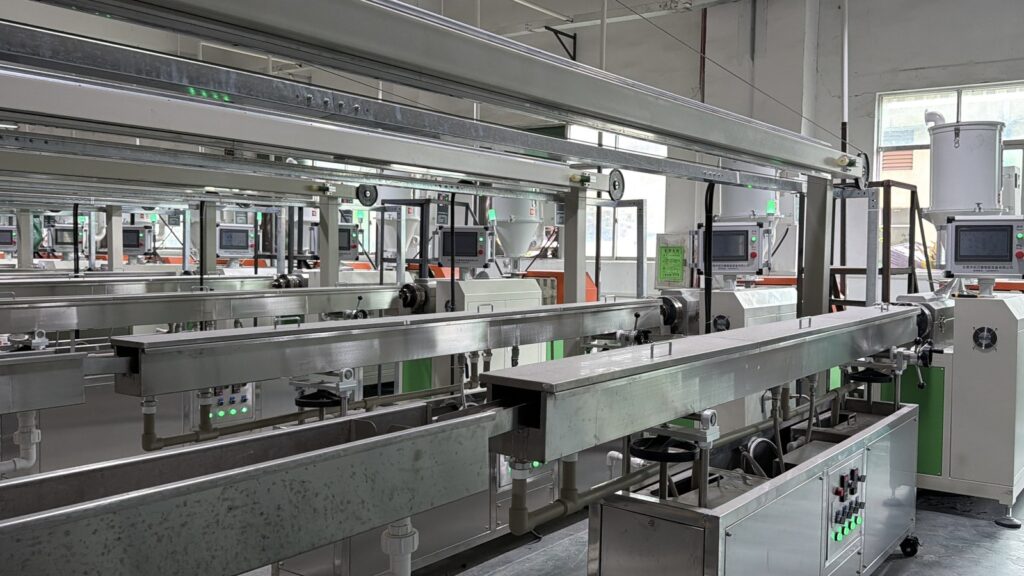
One filament order can look like you are buying from one company, but four different names may be standing behind that spool. The brand, the sales contract, the extrusion line, and the QC report do not always point back to the same entity.
That gap is where most first-order mistakes happen. You pay one name and hope another name made the product correctly. This guide maps the entities so you know who you are really talking to before money moves.
Table of Contents
- Why does supplier identity matter before the first payment?
- What are the four supply models, really?
- How do you desk-verify the legal entity?
- How do you verify the production relationship in writing?
- Which documents reveal the truth?
- What should you treat as red flags vs fine print?
- True or False: common supplier identity assumptions
- FAQ
- Conclusion
Why does supplier identity matter before the first payment?
Money moves fast. Responsibility moves slow. Before you pay, you need to know which name will still be reachable when a batch fails.
I have handled overseas inquiries for FilaSource long enough to hear this often. A buyer gets a nice quote, pays a company, then finds out the product came from somewhere else. The sales contact says the QC report is from the factory. The report names a third company. That is when the relationship gets expensive.
You are not only verifying that a supplier exists. You are verifying which entity signs the contract, which entity extrudes, which entity signs QC records, and which entity receives the money. If those names do not match in a way that is explained in writing, every future quality discussion becomes a game of telephone.
My rule is simple. Never let a quote move to a purchase order until you can write down three names on one page: the seller, the producer, and the entity responsible for quality claims. If any one of them is blank, ask before paying.
What are the four supply models, really?
Every supplier fits a model. The model tells you what to trust and what to check. A bad supplier in a clear model is easier to manage than a mystery supplier with a perfect logo.
| Model | What it is good at | What you must verify |
|---|---|---|
| Factory-direct | Direct production control, faster technical answers, clearer line of responsibility | The factory name on the license matches the name on quotes and QC documents |
| Brand with production partners | Flexible material portfolio, brand accountability, quality process managed by the brand | Written statement of the production relationship, which partner makes which material |
| Trading company | Consolidated sourcing, export paperwork, access to multiple lines without you managing each | The relationship between the trading company and the actual producer, written not verbal |
| Platform aggregator | Convenience, small trial orders, low barrier to start | No meaningful batch responsibility; avoid for 100+ spool orders until identity is clear |
FilaSource is the B2B filament brand of MUMAO Co., Ltd., and works with production partners. That makes us the second model. We are not a factory, and we do not claim to be one. That honesty is what you should expect from any supplier you take seriously.
When I walk a buyer through our company identity page, I want them to see the same names repeated. MUMAO Co., Ltd. as the brand owner. Production partners named in writing for the materials we quote. If a supplier hesitates to write down the producer name, treat that pause as information, not personality.
My rule is know which model you are dealing with before you ask about price. The model decides which documents will exist and who will sign them.
How do you desk-verify the legal entity?
Paperwork tells one story. Registration tells another. Your job is to see if they line up before the wire transfer.
Start with the legal entity on the quote or proforma invoice. Ask for the business license or registration number. Then check the official registry in that country. For China suppliers, a business license lists a business scope. The scope should include manufacturing, processing, or sales of plastic products, 3D printing materials, or similar wording. If the scope says consulting or general trading, that tells you the model.
Use the U.S. government country commercial guides at trade.gov for desk due-diligence steps before the first payment. They cover local registry lookups, common verification practices, and payment risk. They are free and not written by filament suppliers.
One more check. Look up whether the company has changed names recently. A company that was renamed six months ago may still be fine, but you want that stated, not discovered later on a customs form.
My rule is verify the entity that will sign the invoice before you discuss sample shipping. Ten minutes of registry work beats months of chasing a name you cannot find.
How do you verify the production relationship in writing?
A handshake is a memory. A written relationship is a document. Filament quality disputes happen months after the order, when memories are gone.
If your supplier works with production partners, ask for a written statement of the relationship before the first order. That statement should say which legal entity extrudes the product, or at minimum, which production partner handles which material. It does not need trade secrets. It does need to end guessing.
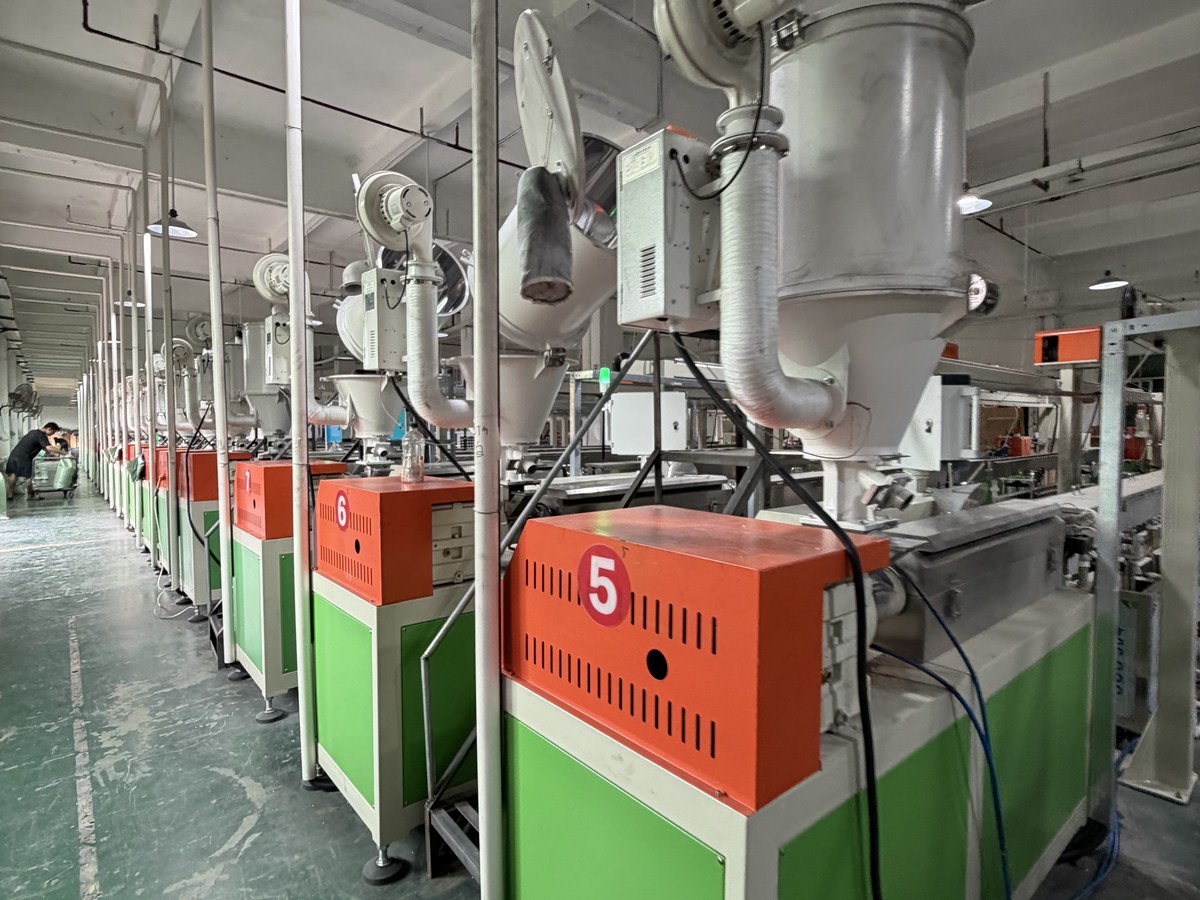
The buyer is looking at capability, not identity. A photo of an extruder hopper can come from any factory. The caption on a QC report can name any company. What matters is whether the entity in the contract has authority to direct and answer for the entity that ran that line.
For FilaSource, I tell buyers the same thing I would tell a friend. Production partners are part of our supply model, not a secret. We state that openly because it lets buyers verify us properly. A supplier that refuses to name the model is asking you to trust marketing instead of paperwork.
Ask one question at quote stage. “Which legal entity runs the extrusion line for this exact material, and how is that documented?” If you get a clear answer, proceed. If you get a story, slow down.
My rule is a written production relationship beats a verbal promise every time. Even one sentence in the purchase agreement is worth more than forty spoken assurances.
Which documents reveal the truth?
Documents reveal what the seller hopes you will not ask. When names misalign across a quote, a TDS, and a QC report, you are seeing the supply chain try to hide in plain sight.
Every document in a filament order should carry the same legal names in a way that is explainable. The quote comes from one entity. The TDS or SDS names a product owner. The QC report names the entity that tested or reviewed the batch. The payment instruction names the recipient. If the names differ, there should be a written explanation.
| Document | Which entity should appear on it | What a mismatch means |
|---|---|---|
| Quote and proforma invoice | The seller and contract party | If the invoice name differs from the seller, confirm in writing who is responsible |
| TDS or SDS | The brand owner or product owner | If it names an unknown third party, ask who owns this material documentation |
| QC report | The entity that reviewed the batch | If a different name appears with no stated relationship, request clarification before payment |
| Payment instruction | The seller or an authorized sister entity | If it names a fourth party, verify it is authorized in writing in the purchase agreement |
Batch-level records matter here. On our quality control page, we describe the records a buyer should expect, not as a claim about a specific lot yet, but as a method. When batch records name one entity and invoices name another, pause.
Also check the sample trail. A sample approval checklist shows a supplier’s real process. If the sample ships from one name and production from another, ask why before committing. That mismatch is not always a problem, but it is always worth asking.
My rule is read the documents like a lawyer with a clock. If the names are consistently unclear, you are not buying from a supplier. You are funding a puzzle.
What should you treat as red flags vs fine print?
Not every imperfection is a red flag. A supplier with an awkward English name and a solid license is fine. A supplier with a perfect name and no traceable registration is not.
Here is a short sorting guide I use with buyers.
Ask first, do not walk away yet: a trading company that openly states it trades; a brand using production partners and willing to name them; a payment instruction that goes to a sister entity if confirmed in writing; a sample that is paid and creditable to the first order by written agreement, as we do for wholesale filament and private label programs.
Walk away, or stop and demand written answers: the seller cannot name the producer; the QC report names an entity nobody mentioned; the payment instruction goes to an unrelated personal account; the business scope is clearly unrelated to plastic production or sales; the supplier claims to own a factory but no license or registry shows manufacturing.
The difference between fine print and red flags is whether the oddity can be reduced to one written sentence. A sister company payment can be. A missing producer name cannot.
My rule is never ignore a document mismatch, but also never treat every curiosity as fraud. Ask. The speed and clarity of the answer is your actual quality signal.
True or False: common supplier identity assumptions
True or False: A trading company is always worse than a factory for large orders.
False. A trading company is worse only when it hides the producer. An openly disclosed trading relationship can still give you legitimate access to production lines with fewer headaches.
True or False: A business license proves a supplier manufactures the product.
False. The business scope on the license is what matters. Sales and trading can coexist with branding, but not every registered name runs an extrusion line.
True or False: QC reports only matter if the factory name is on them.
False. The important thing is that the entity on the QC report has a written relationship to the seller. A brand can sign QC records if it is accountable for the batch.
True or False: A nice sample means the production batch will match.
False. A sample shows one production moment. You still need batch records so the production reality matches the approved reference.
FAQ
What is the minimum order for FilaSource commercial filament?
Commercial orders start at 100+ spools, about 100 kg at 1 kg per spool. A carton holds ten spools, but that is not an MOQ.
Does FilaSource own its own factory?
No. FilaSource is the B2B filament brand of MUMAO Co., Ltd., working with production partners. We state that openly because it affects what a buyer can verify.
Can I get a sample before committing to a big order?
Yes, through a paid sample evaluation. The sample cost is creditable to a first order by written agreement.
Which materials are reliably available from FilaSource?
PLA, PLA+, Matte PLA, and PETG are stable supply materials. TPU, ASA, and ABS are handled per project, so ask at the quote stage.
Conclusion
Know the model. Verify the legal entity. Get the production relationship in writing. Match the documents. Ask before you walk away, and walk away when the answer never comes.
A filament brand that hides its supply model can still print well. A filament brand that states its supply model in writing can be held responsible. Buy from the one that lets you verify. Verification is cheaper than an apology.
Tell us the material, volume, packaging and destination — we reply within 12 hours. Reference MOQ from 100+ spools (≈100 kg) for standard colors.
Discuss Your Project