
 October 29, 2026
Sunlu or eSUN Alternative for Bulk Filament Orders
Beyond Sunlu and eSUN: a bulk-filament buying framework covering batch consistency, MOQ structure, export packing, and private-label readiness, plus what to verify on each supplier TDS.
Table of Contents
- Why Do Bulk Buyers Start With Sunlu and eSUN?
- What Actually Changes When You Order Filament by the Pallet?
- Which Factors Separate a Bulk Supplier From a Retail Brand?
- How Do You Compare a New Supplier Against Sunlu and eSUN?
- What Should You Verify on a Supplier’s TDS Before Switching?
- True or False: Common Beliefs About Bulk Filament Sourcing
- When Does Moving to a Factory Supplier Make Sense?
- Frequently Asked Questions
- Conclusion: Build Your Shortlist on Evidence
Sunlu and eSUN are not retail-only names — both are filament manufacturers in their own right, and both operate B2B and OEM desks alongside the marketplace listings most buyers know. That fact changes what a “Sunlu or eSUN alternative” should mean. When your purchasing moves from a few spools a month to tens of kilograms, the useful question is not which logo to switch to but which supplier — their factory-direct desks included — can hold diameter tolerance, protect moisture, document every batch, and put MOQ, packing, and lead times in writing. This article lays out that buying framework and shows what to verify on each supplier’s TDS before you move volume.
Why Do Bulk Buyers Start With Sunlu and eSUN?
Most people enter 3D printing through these two names, and for good reason. Both are established manufacturers with real industrial footprints: eSUN is the brand of Shenzhen Esun Industrial Co., Ltd., founded in 2002, a polymer-materials producer whose own site offers OEM and ODM service to 3D printer manufacturers; Sunlu is Zhuhai Sunlu Industrial Co., Ltd., which runs a dedicated bulk, OEM, and ODM inquiry channel and maintains verified supplier profiles on B2B platforms such as HKTDC and Global Sources. If you print a few spools a month, buying either from a marketplace is a reasonable default.
As sourcing options the two are not interchangeable. Buyers who arrive from eSUN retail spools are usually chasing a wide, well-documented materials catalogue — PLA+, PETG, ABS variants, support materials; buyers arriving from Sunlu are usually led by shelf price and color range. At bulk volume both paths converge on the same door: you stop shopping a marketplace listing and start a commercial conversation with a factory desk. The products are not the obstacle — the retail channel around them was built for single-spool buyers, in blister-packed boxes and consumer cartons, with paperwork that was never designed for a distributor’s incoming inspection.
So when buyers search for a “Sunlu or eSUN alternative for bulk orders,” what they usually want is not a different logo. They want a supply arrangement: stable per-batch quality, pallet-friendly packing, and a partner who answers commercial questions — MOQ, lead times, custom packing — in writing.
What Actually Changes When You Order Filament by the Pallet?
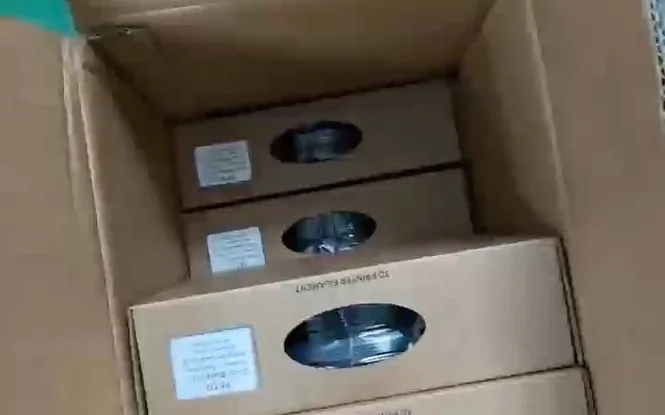
Between a 1 kg order and a pallet-sized order, the product is the same polymer. Everything around the product changes. Consistency starts to outrank peak quality: one excellent spool proves little, while fifty spools that measure and print the same way prove a process, and the difference between “good on average” and “controlled variation” is exactly what your incoming inspection will live or die on.
Packing stops being packaging and becomes a spec. Carton dimensions, spools per carton, desiccant, and seal integrity feed straight into freight quotes and warehouse handling, so a supplier who cannot state them is a supplier who cannot quote your landed cost. Paperwork becomes part of the product for the same reason: at volume you are the one answering customer complaints when something drifts, so batch-level records — a certificate of analysis per lot, a TDS per material — move from nice-to-have to contractual. And price stops being listed and starts being negotiated, because per-kg pricing at volume depends on material, color, packing, and order rhythm.
Framed that way, “alternative to Sunlu or eSUN” really means: a supplier whose wholesale filament program treats those four points as deliverables — whether that supplier is FilaSource, the factory desk of another brand, or a trading company you audit yourself.
Which Factors Separate a Bulk Supplier From a Retail Brand?
Use five factors to judge any factory-direct candidate — Sunlu’s or eSUN’s B2B desks included — against the retail channel you already know:
| Factor | What the retail channel gives you | What to demand at bulk volume | How to verify |
|---|---|---|---|
| Batch consistency | Good average quality; per-lot data rarely on the listing | Diameter and ovality data per production batch | Ask for a CoA with lot numbers; test samples from two different batches |
| MOQ structure | Single spools, no minimums | Clear per-material minimums (FilaSource works from a reference MOQ of 50 kg) | Get MOQ in writing per SKU and color before quoting artwork |
| Export packing | Shelf-ready consumer boxes | Standard spools per export carton with moisture protection | Request carton dimensions, gross weight, and packing photos before the first order |
| Private label readiness | Fixed brands and shelf packaging | OEM or private-label terms in writing: artwork specs, spool and box options, a documented QC step | Ask for the private-label workflow and sample artworks — process quality shows here |
| Commercial communication | Marketplace messaging queues | Named contact who answers MOQ, packing, and documentation questions in writing | Time the reply quality on your first three questions |
One point of honesty about that table: it contrasts channels, not companies. Sunlu and eSUN both run manufacturing and OEM operations, so no row above should be read as “brands like these cannot do it.” The question is whether the specific channel you are talking to — a brand’s B2B desk, a specialist wholesaler like FilaSource, or a trading company — answers these five questions in writing, and how quickly.
Two of the five factors deserve the extra attention buyers usually skip. MOQ structure is where programs stall: a supplier whose real minimum for your color sits far above your monthly usage will strand cash in inventory, so get minimums per SKU and color before anyone quotes artwork. Commercial communication is the cheapest predictor you have — a named contact who answers MOQ, packing, and documentation questions in writing during the sales conversation (our own commitment is a 12-hour reply) will behave the same way after your deposit clears, and one who cannot, will not.
Compliance documents belong in the same file, even though they are not a table row. For EU distribution, ask for REACH and RoHS declarations; for US programs, ask whether any food-contact or FDA-related claim is backed by a written statement rather than marketing copy; and ask whether the factory operates a documented quality system such as ISO 9001, then request the certificate’s scope and validity dates rather than the badge alone. eSUN, for instance, presents FDA-related certification on its B2B profile — that is the level of documentary specificity you should expect from any candidate, including us. Exact tolerances, prices, and batch data for any supplier belong in those documents, not in a blog post: for any candidate, retail or factory-direct, the rule is the same — verify on the supplier’s TDS and batch documents.
How Do You Compare a New Supplier Against Sunlu and eSUN?
Run the comparison as a structured evaluation, not a vibe check:
- Define your order reality. Kilograms per month, lead materials (PLA, PLA+, PETG), colors, and whether you ever want your own brand on the spool. This single page eliminates most mismatches before any sample ships.
- Ask the same five questions of every candidate — the five factors in the table above — and score the written answers.
- Buy samples from two production batches and print identical test files under fixed settings. Differences between the two batches tell you more than any brochure.
- Compare landed cost, not unit price. Freight per carton, packaging that survives transit, and a defect path that does not eat your margin are all part of the real number.
- Start with a first article, then ramp. A trial order that passes your incoming inspection earns the second order; nothing else should.
The same evaluation applies when the “new supplier” is a B2B desk at a brand you already buy retail — compare their factory-direct quotation against other factory-direct quotations, not against marketplace listings, or the comparison is rigged twice over.
First-order trade mechanics deserve their own line on the scorecard. Agree the Incoterm before comparing quotes: an FOB price and a CIF price are not comparable until you add freight and insurance yourself, and neither is comparable to an ex-works price plus your forwarder’s bill. Confirm the payment structure in writing — export filament orders commonly run on a telegraphic-transfer deposit with the balance against shipping documents, with letters of credit appearing at larger order values. Then separate production lead time from transit time and ask how sample approval affects the production slot. A quotation missing any of those three is not yet a quotation.
How Should Samples and the First Order Run?
Keep the evaluation commercial and symmetrical for every candidate, including FilaSource. Ask for paid samples from two identifiable production batches — a supplier who takes sample orders seriously is showing you how they will take your purchase orders. Run both batches through the same fixed-settings test print and record the results on one page. If the samples pass, place a small first order at the supplier’s standard minimum (ours is a reference MOQ of 50 kg for wholesale materials) and treat it as your first article: inspect it on arrival against the same page, then compare the two experiences before you ramp. This sequence costs little, takes about two weeks, and replaces hope with a written track record you can defend to your own customers.
What Should You Verify on a Supplier’s TDS Before Switching?
The technical data sheet is where marketing claims either gain method names or stay vague. Before switching volume to any supplier — including away from a retail brand you trust — check that the TDS states, for each important value:
- A named test method for strength, modulus, and impact figures (ISO or ASTM designations), not bare numbers.
- Diameter tolerance and ovality limits, expressed as a range you can write into a purchase order.
- Printing-condition baselines (nozzle and bed temperature ranges) so your support team knows what to tell customers.
- Lot traceability wording — whether measured values are per-batch or typical values from development.
Published standards give you neutral language for these requirements; for example, ISO 5425 addresses PLA filament requirements and is viewable in the iTeh Standards catalog. A supplier whose quality process is real — like the batch-level checks described on our quality control page — can map every TDS line to how it is measured.
True or False: Common Beliefs About Bulk Filament Sourcing
“A brand that is strong on marketplaces is automatically the right bulk supplier.” — False. Marketplace strength proves the retail channel: consumer marketing, shelf availability, single-spool logistics. Sunlu and eSUN can both serve bulk buyers through their own manufacturing and OEM desks, but that is a separate conversation with separate paperwork — batch documentation, export packing, MOQ in writing — and it has to be evaluated on its own record, not inherited from retail reputation.
“The lowest per-kg price always wins at pallet volume.” — False. One drifted batch at volume costs more in claims, reprints, and customer goodwill than a full year of per-kg savings. When two quotations sit close, consistency data, compliance documents, and a written remedy clause are worth more than the spread between them.
“You can judge a filament factory from its product pages alone.” — False. Pages describe intent; certificates of analysis, sample prints from two batches, and packing photos describe practice. Ask for all three before a deposit changes hands, and treat reluctance to produce them as data.
“You have to move all of your filament purchasing to a factory at once.” — False. Hybrid sourcing is usually the honest intermediate step: put your high-runners — the two or three SKUs that make up most of your kilogram volume — on a factory program where negotiated pricing and per-batch documents pay for themselves, and leave slow movers and specialty colors on retail purchase until each one clears a sensible minimum on its own volume.

When Does Moving to a Factory Supplier Make Sense?
Three triggers usually mark the switch point. First, volume: when monthly usage makes per-spool retail pricing and packing visibly more expensive than a quoted program. Second, brand goals: the moment you want your own name on the spool, you need a private-label filament partner, not a reseller. Third, product direction: if your roadmap includes tailored formulations or custom colors, look for a supplier with a real custom development process rather than a catalog-only factory.
If none of the three has happened yet, staying with retail channels is fine — and revisiting the question at your next volume step costs nothing. Between those points, the hybrid pattern from the previous section is the pragmatic answer: factory terms for the SKUs that carry your volume, retail for the long tail. The mistake to avoid is not mixing channels; it is letting a color you sell a few dozen kilograms of per year force your whole program into terms sized for a full pallet every month.
Frequently Asked Questions
Can I just buy Sunlu or eSUN spools in bulk instead?
You can. Both Sunlu and eSUN are manufacturers with their own B2B and OEM desks, so buying bulk from either is a real option rather than a workaround. Treat that channel the way you would treat any factory supplier: request per-batch documents, export packing details, and MOQ terms in writing, then weigh the offer against other factory-direct programs on the same five factors before committing volume.
What MOQ should I expect from a factory supplier?
Reference MOQ starts from 50 kg for standard colors, 500 kg for custom packaging, and 3,000 kg for custom colors. Confirm the tier that applies to your program in writing before the first order.
How do I test a new supplier before committing?
Order paid samples from two production batches, verify every technical claim on the supplier’s own TDS, and score candidates on consistency, MOQ terms, and packing before placing the first real order.
Conclusion: Build Your Shortlist on Evidence
Sunlu and eSUN run their own manufacturing and B2B operations, so the search for an “alternative” was never about a capability gap on their side. It is about the standard you hold any supplier to at bulk volume: consistency proven per batch, MOQ and packing quoted in writing, compliance documents you can file, and a private-label path for when the time comes. Score candidates on the five factors, verify every technical claim on the supplier’s own TDS, and let a two-batch sample decide the finalists. If that is the kind of conversation you want to have, tell us about your program — or start from our wholesale and private-label pages to see how we structure the paperwork.
Tell us the material, volume, packaging and destination — we reply within 12 hours. Reference MOQ from 100+ spools (≈100 kg) for standard colors.
Discuss Your Project