
 October 31, 2026
The Pre-Shipment QC Report Every Filament Order Should Include (and When to Reject a Batch)
A CoA proves a batch was measured, not that wrong results have consequences. Build a pre-shipment QC report with named acceptance limits, learn which values deserve hard limits, and put rejection criteria in writing before money moves.
Table of Contents
- Why Is “Send Us the CoA” Not Enough?
- What should a pre-shipment QC report contain?
- Which Values Deserve Hard Limits?
- How do you write rejection criteria into the purchase order?
- How Do First Articles Differ From Routine Releases?
- What does documented QC look like on a real TDS?
- When Should You Reject the Batch?
- What One-Page Incoming Inspection Can Your Warehouse Run?
- Where Does This Leave Your Program?
- Frequently Asked Questions
- Conclusion: Put the Numbers Where the Money Is
A certificate of analysis tells you a batch was measured; it does not tell you what happens when the measurements are wrong. That gap is where most filament quality disputes live. The fix is a pre-shipment QC report with named acceptance limits: the supplier measures the finished lot against numbers you both agreed to in the purchase order, documents the results per batch, and the contract says plainly what remedy applies when a limit is missed. If any of those three pieces — measured values, agreed limits, remedies — is missing, you do not have acceptance criteria. You have paperwork.
Why Is “Send Us the CoA” Not Enough?
Buyers have learned to ask for a certificate of analysis, and most factories can produce one. But a CoA only has meaning when it is checked against limits that were written before production. Otherwise the document drifts into a formality: a sheet of numbers nobody is accountable for, generated by the party with the strongest interest in shipping on schedule.
A workable acceptance structure has three layers, each answering a different question:
- The specification (TDS) — what the material is supposed to be.
- The acceptance limits (PO) — which measured values pass, and which fail, for this order.
- The QC report (per batch) — what was actually measured on the finished lot, compared against those limits.
Suppliers handle this structure routinely in industrial markets. Filament buyers who adopt it simply bring the same discipline to their spools.
What should a pre-shipment QC report contain?
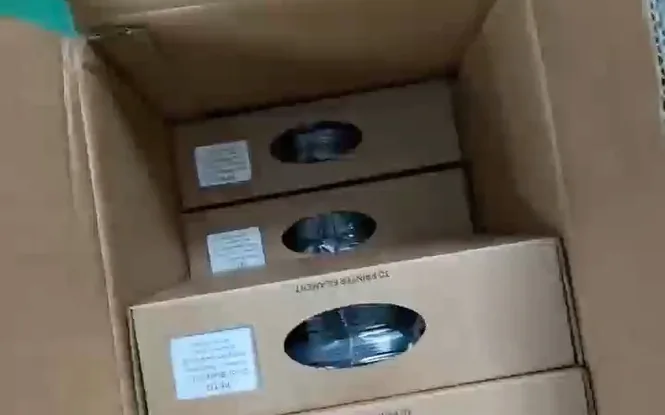
Ask for the report as a single document (or a clearly bundled set) covering the finished lot. At minimum, it should carry:
| Field | Example content | Why it belongs |
|---|---|---|
| Order and SKU reference | PO number, material, color, spool size | Ties the report to the contract |
| Lot / batch identifiers | Batch numbers matching box labels | Makes the report traceable to goods you receive |
| Production dates and line | Date range, extrusion line ID | Connects the lot to process records |
| Diameter statistics | Average, minimum, maximum measured diameter | The core spec for feeding and finish |
| Ovality or roundness | Maximum out-of-round figure | Drives under-extrusion and grinding |
| Net weight per spool | Measured weight for sampled spools | Short-weight spools are a quiet margin leak |
| Winding inspection | Checked for crossovers and loose winds | Jams hit your customers’ printers first |
| Packaging check | Seal integrity, desiccant present, box condition | Moisture damage starts in transit |
| Moisture content | Measured value per batch, with method (oven or Karl Fischer) | A “dry” checkbox is not a measurement |
| Measurement method | Gauge type, sampling points per spool | Numbers without methods cannot be compared |
| Sign-off | Named inspector or QA role, date | Accountability when something is wrong |
A report with these fields is quick for a real factory to produce, because the data already exists in its internal records. Difficulty producing it is itself a finding.
One row deserves emphasis: moisture. For hygroscopic materials, require a measured moisture value per batch with the method named — oven method or Karl Fischer titration are the usual ones. A “dry” checkbox is not data. The measured value is what lets you compare lots, catch a drying step that slipped, and argue a claim with a number rather than an assertion.
Which Values Deserve Hard Limits?
Not every row needs a contractual limit in your first order. Buyers who run this system tend to draw hard lines around the values that most directly hurt resale:
- Diameter band. Define the nominal diameter and the permitted minimum and maximum. State that any measured point outside the band in the supplier’s own sampling is a failed lot.
- Ovality. Set the maximum out-of-round the material may carry. This one value quietly decides how the filament behaves under pressure in an extruder.
- Net weight. Specify minimum net weight per spool and permit no negative tolerance beyond it.
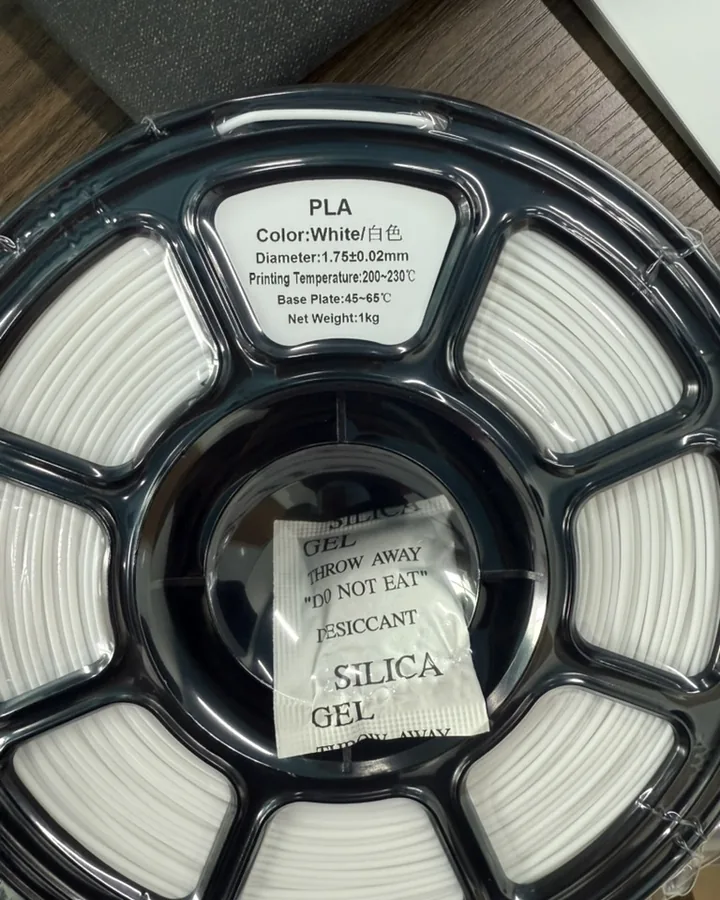
- Packaging integrity. Require sealed packaging with desiccant for hygroscopic materials, and treat broken seals on arrival as a documented claim.
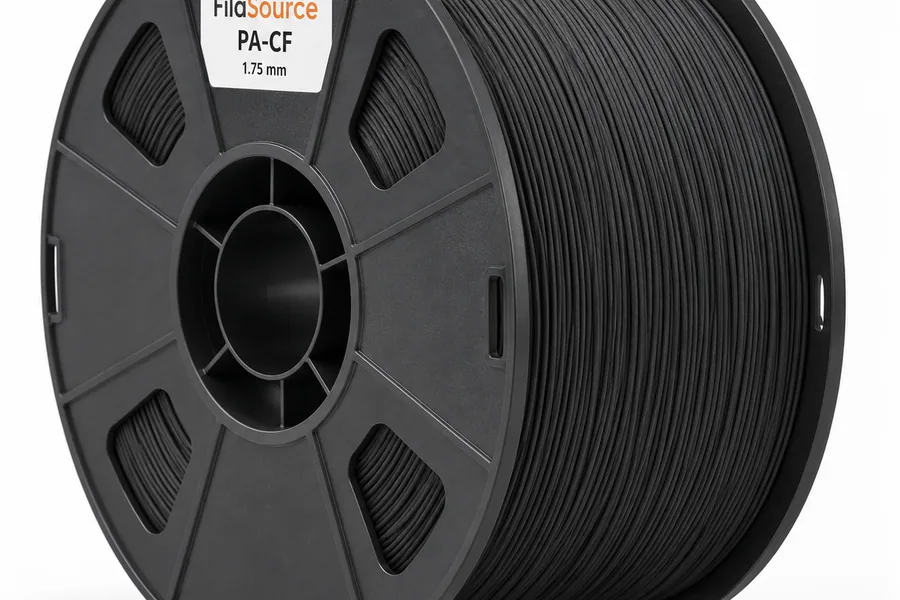
Diameter deserves a number, not an adjective. Commodity filament commonly carries ±0.05 mm; the Jabil TDS cited later in this article states ±0.03 mm; FilaSource publishes 1.75 mm ±0.02 mm on its own technical data. Any of the three gives Annex A a defensible band, and each step tighter raises the supplier’s reject rate and with it your price — a tradeoff to make deliberately, not to meet for the first time on inspection day. Ovality needs less invention and more data: require the report to record the maximum and minimum diameter of each sampled spool, so out-of-round is computed from measured numbers, and set the limit from what your customers’ extruders actually tolerate rather than from a figure nobody can trace.
Soft, monitor-only fields — surface finish notes, minor cosmetic observations — can sit in the report without contractual teeth. The point is to know which is which, before a dispute forces the question.
How do you write rejection criteria into the purchase order?
Acceptance language does not need to be long. A workable clause pattern looks like this:
“Supplier shall provide a pre-shipment QC report for each production batch, covering the fields in Annex A, measured as described therein. Any batch whose reported values fall outside the acceptance limits in Annex A shall be reworked or replaced at supplier’s cost, or rejected at buyer’s option. Payment milestones are contingent on receipt of the QC report.”
Three elements in that sentence do the real work:
- The report is a deliverable, tied to payment — not a favor requested after shipment.
- Failure has named remedies — rework, replacement, or rejection — so nobody improvises under pressure.
- Buyer’s option on the remedy keeps the decision with the party holding the money.
Sampling deserves its own clause, and you do not have to invent one. ISO 2859-1, equivalent in practice to ANSI/ASQ Z1.4, is the standard pre-shipment inspection works from. Specify general inspection level II and let the tables do the arithmetic: a lot of around 800 spools draws a sample of 80, and every other lot size maps to its own sample code. Then set acceptance quality limits; AQL 2.5 for major defects and 4.0 for minor defects is a common starting point in filament sourcing. Take the accept and reject figures straight from the standard’s tables for your lot size and AQL rather than estimating them, and require the supplier’s sampling to follow the same plan, measured at the start, middle, and end of each sampled spool. With the plan written into the contract, the argument about whether one measured spool represents ten thousand never starts.
Two commercial details make the remedies real. Name who pays return freight and re-inspection when a reworked lot has to be checked again, and set a deadline for the refund or credit note once a lot is finally rejected. Remedies without a cost allocation and a clock default back to negotiation, which is exactly what the clause exists to prevent.
How Do First Articles Differ From Routine Releases?
For a new supplier or new SKU, split the first shipment from the routine rhythm. Treat shipment one as a first article: full measurements, your own incoming inspection on arrival, and an explicit written confirmation that the lot becomes the reference baseline. Routine lots then carry the standard QC report and are compared against that baseline rather than starting the relationship from zero each time.
This mirrors how mature buyers in other materials categories work, and filament adapts easily because its key measurements — diameter, ovality, weight — are quick and objective.
Write down what re-triggers a first article, too: a change of resin supplier, a new masterbatch, a relocated extrusion line, a production pause long enough to change seasons. Any of these can shift the process the baseline describes, and a baseline that no longer describes the process protects nobody in a dispute. When a later lot drifts, the disagreement is settled by comparing two dated documents, not two memories.
Some checkpoints are worth buying from outside. Book third-party pre-shipment inspection or container-loading supervision — SGS, Intertek, TÜV, or a dedicated QC agency — when a full container or full-pallet order is a first order, when the supplier is new to your program, or when a lot has a rejection history. The external inspector samples against your AQL plan, photographs the goods and the loading, and typically charges a few hundred US dollars for a one-day check — small against the freight on a rejected container. The factory’s QC report still anchors the contract; the external visit verifies it. FilaSource’s own production, quality control, and traceability sit under a current third-party assessment, with the Intertek status stated on the quality-control page — the kind of arrangement that makes an external check a cross-reference rather than an accusation.
What does documented QC look like on a real TDS?
Skeptical suppliers sometimes imply that per-batch documentation is an unreasonable ask. Public examples say otherwise. Major manufacturers publish technical data sheets with named test methods and real values — for instance, Jabil’s published PLA filament TDS lists measured properties with the standards used to obtain them. That is the baseline a serious partner should meet or explain: numbers, methods, dates, and lot traceability.
The three documents do different jobs, and a supplier who merges them is handing you one paper where you need three. The TDS states what the product is: typical property values tied to named methods, as the Jabil sheet does when it pairs tensile figures with ASTM D638. The CoA states what this batch measured against the product spec. Your pre-shipment QC report states what this lot measured against your acceptance limits, at your sampling rate. A published TDS is also a drafting tool: lift its method names into your measurement-method row, use its tolerance to seed your diameter band, and treat the distance between its “typical values” and your batch numbers as exactly what the acceptance limits police.
When Should You Reject the Batch?
With limits agreed, rejection stops being an escalation and becomes arithmetic. Reject — or invoke the remedy clause — when any of these appear:
- Reported values outside the agreed acceptance band on the supplier’s own measurement.
- No lot-level report for a shipped batch, after the clause is in force.
- Batch identifiers on the goods that do not match the QC report.
- Broken seals or missing desiccant on hygroscopic materials, documented with photos at receipt.
- Refusal to re-measure a disputed lot by an agreed method.
Each of those is a process failure, not a cosmetic quibble. Suppliers who object to them in principle are telling you how they will behave when a real failure costs real money.
What One-Page Incoming Inspection Can Your Warehouse Run?
Acceptance does not end at the factory gate. Give whoever receives your containers a routine that takes minutes per pallet and writes down four things: the batch numbers on the boxes matched against the QC report; the condition of seals and desiccant on a sample of bags; a spot-check of net weight on a few spools; and a diameter measurement on one spool per sampled batch, taken at the start, middle, and end of the winding. Photograph anything that fails and file the photos with the report. Done every shipment, this routine quietly builds the evidence trail that makes any later claim — freight, customs, or quality — straightforward to argue with dates and pictures instead of recollection.
Where Does This Leave Your Program?
Acceptance criteria travel well across your sourcing program: the same clause template protects a first trial pallet of one color and a multi-SKU wholesale filament program. Internally, your team gains a repeatable incoming-inspection checklist, and your supplier gains a fair, written definition of “good.” If you are still comparing suppliers, run this structure as part of the evaluation and watch who engages with it comfortably — that comfort is a reliable signal of process maturity. You can browse the filament lines we supply and ask us for the documents discussed here at any stage of your evaluation.
Frequently Asked Questions
Will suppliers refuse to work under acceptance criteria?
Well-run factories rarely do — they already measure these values internally and mostly need to format them. Resistance usually comes from trading companies with no line access, which is exactly the distinction you are trying to surface.
Do I need to inspect every spool on arrival?
No. Mirror the agreed sampling: check the reported values against the QC report, verify batch identifiers, then inspect a sample of spools from the shipment — sealing, weight, winding, and a diameter spot-check. Full inspection belongs to disputes, not routine receipt.
What if the supplier’s numbers pass but the filament prints badly?
That is a specification gap, not a compliance failure. Add the missing dimension to your acceptance limits next order — for example, a fixed-settings test print requirement — so the contract learns from experience instead of repeating it.
How long should we keep QC reports on file?
Keep them for at least the life of the product line plus any warranty period you offer customers, and longer if you sell into regulated channels. The reports are your evidence base for warranty claims, supplier disputes, and any future audit of your own quality system — and storage costs nothing compared to reconstructing batch history years later from a supplier who may no longer answer the phone.
How does this interact with the certificate of analysis?
The CoA is one row of this system: the batch-level statement that measured values exist. The acceptance structure around it — limits, remedies, verification — is what turns that statement into protection.
Conclusion: Put the Numbers Where the Money Is
A pre-shipment QC report only protects you when it carries measured values, agreed limits, and named remedies. Steal the clause pattern above, run the one-page incoming check, and keep the reports on file. If you are structuring a wholesale filament program and want a supplier who works this way, send your acceptance checklist through the inquiry form.
Tell us the material, volume, packaging and destination — we reply within 12 hours. Reference MOQ from 100+ spools (≈100 kg) for standard colors.
Discuss Your Project