
 October 29, 2026
How Many Spools for a First Filament Trial Order? | FilaSource
Size the first order for the evidence it produces: 50 kg across five cartons, tested for consistency between batches, then ramp monthly volume on burn rate — and let the 50/500/3,000 kg tiers unlock branding, not demand.
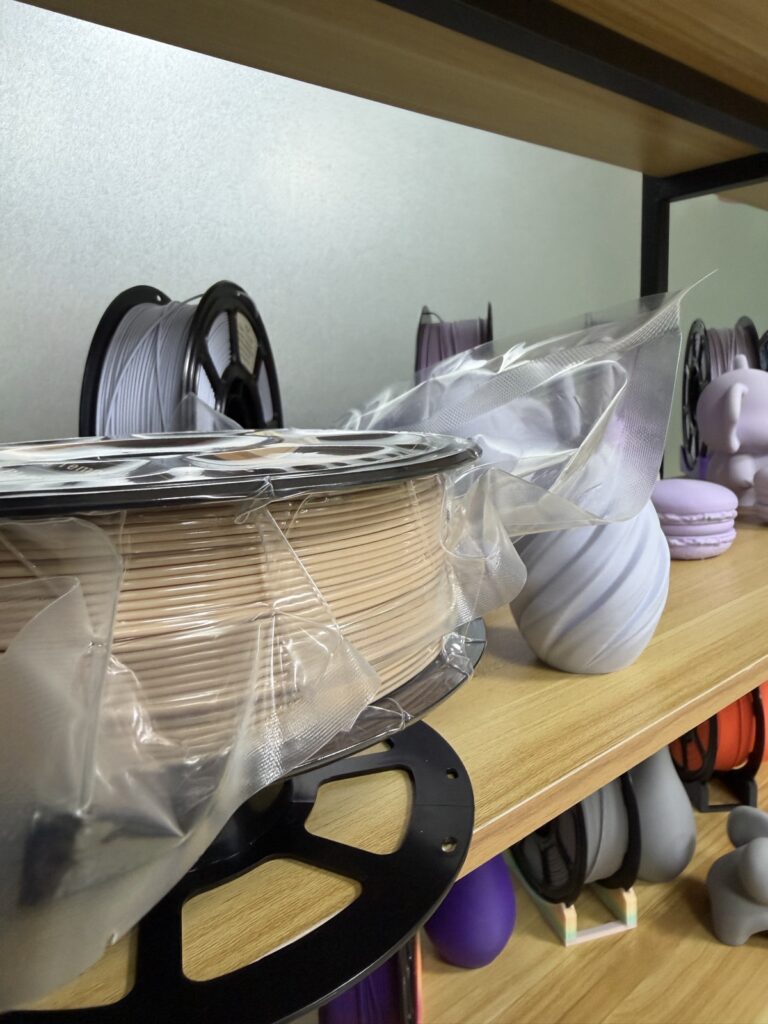
The honest answer to “how many spools should the first trial be” is a number that produces evidence, not a number that feels safe. Order one spool and you have tested a spool; order a pallet from a stranger and the season rides on the bet. Between those errors sits the trial size that answers the only question: does this supplier ship the same filament twice?
The working answer for B2B buyers: size the trial at the reference entry point — 50 kg of standard colours, five export cartons — treat it as data-gathering, and let monthly volume follow the evidence instead of the discount table.
Table of Contents
What Is the Right Size for a First Filament Trial?
A trial has to be big enough to sample the supplier’s real behaviour and small enough to survive being wrong about them. One spool fails the first test: it comes from a single production batch, so it tells you nothing about consistency — and consistency, not the first impression, is what you are buying. A full season’s volume fails the second: money committed before evidence exists is not sourcing, it is hope with a purchase order number.
The reference entry point for standard colours is 50 kg — five export cartons of ten 1 kg spools. At that size you can spread the order across colours and, subject to the mixing policy confirmed with your quote, across materials: PLA for the shelf, PETG for the workhorse buyers, a trial colour you have been asked for repeatedly. Each carton then works as a sampling position: inspect across the five, print from more than one, and you have a small but real read on variance between cartons and lots.
The same order also calibrates everything downstream of it. Carton dimensions, gross weights, packing as quoted, and whatever lot or batch information the supplier actually provides — the trial is the first and cheapest time to check each against what the quote said. A supplier who is careless at 50 kg is telling you what 500 kg will feel like, at one tenth of the tuition.
What Should the Trial Order Prove Before You Ramp?
Write the evidence list before the order ships; a trial that ends with “seems fine” has produced nothing. Four outputs carry the weight:
- Consistency across lots. Print the same test model from spools in different cartons, ideally from identifiable production batches, on the same machine with the same settings. Variance between spools is the single number a small order can measure that a catalogue cannot.
- Specs that match reality. The diameter tolerance and print parameters live in the technical data sheet for the material; the trial is where you check printed behaviour against the document. For a sense of what a published filament TDS looks like when it is done properly, Jabil’s PLA filament data sheet is a public example of values tied to test methods.
- Packing as quoted. Sealing method and box format as stated in the quote — checked line by line at arrival; do not assume desiccant unless the written quote lists it. A trial that arrives dry and square is a packing specification you can trust at volume.
- A first read on sell-through. Which colour moved first, which sat, what customers asked for that you did not carry. The trial is market research that happens to also be inventory.
Buyers who need formal sign-off — distributors with acceptance criteria, brands with a reputation riding on the spool — can run the same structure as a defined exercise with inputs and pass/fail gates; that is what a product validation process is for. The discipline is identical, only the paperwork deepens.
How Do You Turn Trial Results Into a Monthly Volume?
Monthly volume is arithmetic wearing a strategy costume. Start with burn rate: what did the trial quantity actually sell through in the weeks after arrival, net of the samples you kept for testing? Convert to kilograms per month, then multiply by the replenishment cycle — lead time confirmed for the reorder, plus the safety weeks you want between “last spool sold” and “next container opened”. A supplier shipping against confirmed lead times makes that arithmetic stable; a supplier quoting fixed days from a price list has not checked the schedule your arithmetic depends on.
Ramp on multiples of the evidence, not on the calendar. A common pattern: the second order repeats the trial size to confirm the first was not luck; the third begins scaling toward measured monthly demand; the fourth and following settle into a cadence where order size equals burn rate × cycle, reviewed each quarter. Nothing in that sequence requires heroics — it requires the trial’s paperwork to still exist when ordering decisions get made.
One habit protects the whole climb: keep the reorder conversation anchored to the same specification the trial verified. Same tolerance source, same packing lines — and record whatever lot or batch information the supplier actually provides. Volume changes numbers; it should never quietly change the spec.
When Does a Trial Tell You to Walk Away?
Most trials pass. The failures are worth naming because they are cheap to see at 50 kg and ruinous at 500:
- Variance between cartons — one carton prints clean, the next strings on the same settings, and the difference survives a second test print. Single-spool buyers blame the printer; five-carton buyers see the pattern.
- The TDS gap — printed behaviour that the document cannot explain, or a document that arrives vague where the quote was specific. If the numbers do not bind at trial size, they will not bind at volume.
- Undocumented packing deviations — a carton short of boxes, sealing that differs between lots, weight that does not match the quote. Each is small; together they describe how the next ten containers will arrive.
- Slow, vague replies before money has fully moved. Response quality at trial size is the best version of itself you will ever see.
None of these findings require an argument with the supplier. They require a decision: correct once and re-verify, or stop. The trial exists precisely so that stopping costs five cartons instead of a season.
How Does the Ramp Cross MOQ Tiers?
Filament programmes price in tiers, and each tier is unlocked by a different kind of evidence from your own sales:
| Tier | Reference MOQ | What unlocks it |
|---|---|---|
| Standard colours, wholesale | From 50 kg | Trial passed; catalogue colours selling at a steady monthly rate |
| Custom packaging, private label | From 500 kg | Repeat rate justifies your own box, label and barcode on proven spools |
| Custom colours | From 3,000 kg | A colour your customers re-buy in volume, worth matching and holding across lots |
All three are confirmed per project — the reference numbers are entry points, not price lists. The pattern that matters: branding decisions follow volume evidence, never precede it. Private label at 500 kg works because by then the trial has told you which SKUs deserve your name on them; custom colours at 3,000 kg work because a matched colour is an inventory commitment a supplier can only schedule against proven demand. Buyers who climb the tiers in that order are buying certainty; buyers who jump straight to the top tier are renting risk with better artwork. The full first-contact flow — what to send, what happens in the first 12 hours — is walked through in How to Start Your First Filament Order, and the programme terms sit on the wholesale page.
True or False: Trial-Order Beliefs
True or False: A single sample spool is enough to judge a new supplier.
False. One spool samples one batch. Consistency lives between batches and between cartons — which is why the trial size starts at five cartons, not one.
True or False: Monthly volume should be set from the supplier’s discount tiers.
False. Volume follows burn rate × replenishment cycle from your own sales. Tiers set the packaging and customisation you unlock, not the demand you serve.
True or False: If the trial passes, the ramp can skip straight to private label.
False as a rule. The 500 kg packaging tier is unlocked by repeat-rate evidence. One clean trial proves the material, not yet the demand for your box.
FAQ
Is 50 kg a minimum or a recommendation?
It is the reference MOQ for standard colours — the entry point — and it happens to be the right trial size for most buyers: enough cartons to sample variance, small enough to survive being wrong. Confirmed per project.
Can the trial mix materials and colours?
Ask for the mixing policy with your quote; it is confirmed in writing. A mixed trial is usually the better experiment — PLA, PETG and one asked-for colour tell you more than five cartons of one SKU.
How long before a trial becomes a monthly programme?
Typically two order cycles: the trial, then a repeat at the same size to confirm the first was not luck. Volume scaling starts on the third order, paced by your measured burn rate.
Do trial samples cost extra on top of the order?
Samples ahead of an order are paid, and the fee can be credited against a qualifying first order as agreed in writing — which makes the trial’s evaluation cost disappear into the order it justified.
Conclusion
Size the first order for the evidence it produces: 50 kg across five cartons, spread by the mixing policy, tested for consistency between cartons, checked against the TDS and the quoted packing. Turn results into a monthly number with burn rate and replenishment cycle, not with the discount ladder. And let the tiers — 50, 500, 3,000 kg — unlock on what your customers actually re-buy. That is the whole method: evidence first, volume second, branding third.
Tell us the material, volume, packaging and destination — we reply within 12 hours. Reference MOQ from 100+ spools (≈100 kg) for standard colors.
Discuss Your Project