
 October 30, 2026
Filament Lead Times and the Factory Calendar
A quoted lead time assumes a normal week. This guide covers what the factory calendar does to that number around Chinese New Year and Golden Week: the dates to get in writing, the last pre-holiday production slot, and restart-queue planning.
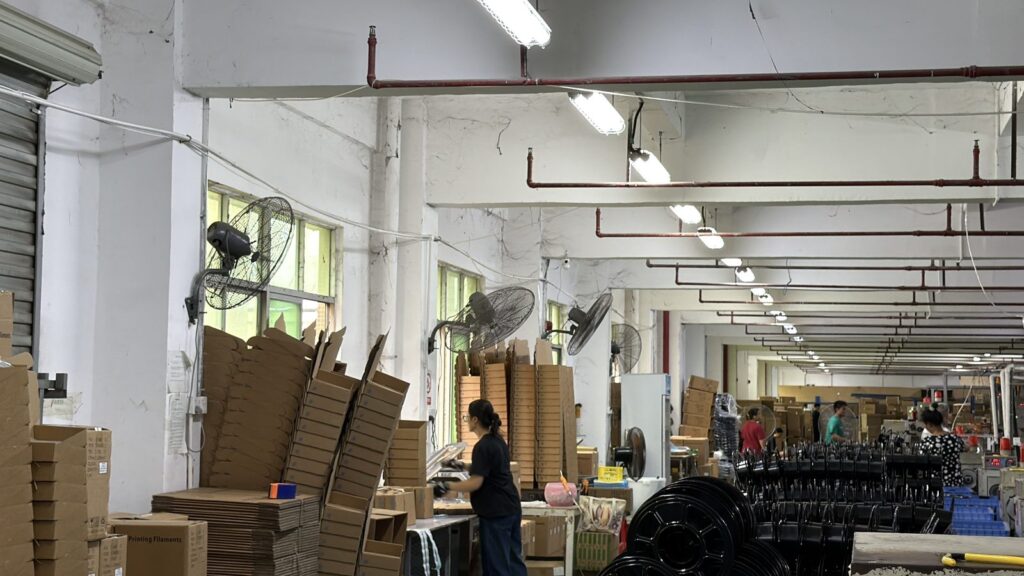
A “20-day lead time” is only true on the day it is quoted. The same factory, same order — a different outcome depending on the week it lands. Around Chinese New Year, Golden Week and the pre-holiday rush, quoted lead times stretch in ways no email-chasing fixes, because the constraint is the calendar, not effort.
Buyers are taught to decompose a lead-time quote — what the clock includes, when it starts. Necessary, incomplete. This guide adds the missing layer: how the factory calendar changes what a quoted number means, and what to ask so your launch date never rests on a week the plant is closed.
Table of Contents
- Why Does the Same Lead-Time Quote Stretch Some Weeks?
- What Should You Ask About the Factory Calendar Before Ordering?
- How Do You Plan Orders Around Chinese New Year?
- What Happens to the Queue After a Shutdown?
- How Does a Calendar-Aware Order Plan Protect Your Launch?
- True or False: Lead-Time Calendar Beliefs
- FAQ
- Conclusion
Why Does the Same Lead-Time Quote Stretch Some Weeks?
Filament factories in China run against an official public holiday rhythm that buyers outside the country routinely underestimate. Chinese New Year, which falls between late January and mid-February, closes most plants for one to two weeks — and its date moves every year, so the disruption lands in a different month each season. National Day Golden Week in the first days of October closes factories again. Around each closure sits a wider shadow: the week before, when every customer in the pipeline tries to get their order onto the last departing truck, and the week or two after, when a plant reopens to a queue it cannot immediately digest.
The official holiday schedule is published by the government — the State Council’s holiday arrangements are the reference both sides can check — but the factory’s own calendar is the one that matters: which days the line stops, which days the office answers, when the last pre-holiday production slot closes. A quoted lead time assumes a normal week. There are perhaps six or seven normal weeks a year that touch one of these windows; land your order in one, and the number you were quoted silently becomes fiction.
There is a second, quieter calendar effect: the pre-holiday rush is not one week but three. Experienced buyers place orders early enough that raw materials, colour matching and artwork approval all finish before the crunch, because every step that needs a human decision competes with every other buyer’s identical plan. The factory is not hiding this from you; it simply answers the question you asked. Ask about days, and you get days. Ask about the calendar, and you get the truth.
What Should You Ask About the Factory Calendar Before Ordering?
Five questions, asked before the order is placed, convert the calendar from a surprise into a planning input:
- When does the line stop, exactly? Not “are you closed for the holiday” but the last production day and the first restart day, in writing, for the specific plant that will run your order.
- When is the last pre-holiday slot? Every factory has a final order cutoff that makes it onto the last truck or container before closure — usually earlier than buyers guess, because packing, inspection and paperwork still need working days after extrusion.
- What does the restart queue look like? An order placed the week before closure effectively joins a queue that starts moving when the plant reopens. Ask how many days of accumulated orders typically stand in front of yours.
- Who answers during the closure? Sales offices and production lines do not stop on the same days everywhere. Knowing which days you can still get a reply, a photo or a decision keeps small issues small.
- How is your quoted lead time adjusted for these weeks? A supplier who has already baked the calendar into the number will say so in one sentence. A supplier who has not is quoting you a normal-week figure for an abnormal week.
None of this is about distrust. Factories plan around their calendar all year; the information exists on a whiteboard in the production office. The only failure mode is the buyer not asking — which is why the first-order guide puts the question list in your hands before the first quote, not after the first delay.

How Do You Plan Orders Around Chinese New Year?
Chinese New Year deserves its own section because it is the one closure that swallows the whole supply chain at once. Your factory closes; so does the packaging printer, the label supplier, the forwarder’s booking desk, and the port’s appetite for overtime. The practical plan has three moves.
First, work the real deadline, which is the last pre-holiday production slot — not the holiday itself. If that slot is four to six weeks before the closure date in a given year, that is your true order-by date, and every step that precedes production (material confirmation, sample or artwork approval, payment) has to fit inside it. Lead time at FilaSource is confirmed per project after sample or artwork approval and payment, and that clock is exactly the one a holiday calendar compresses.
Second, move the decisions, not just the goods. Colour choices, label artwork, packaging confirmation — anything that requires a human on the other end to approve — should be finished before the pre-holiday rush eats everyone’s attention. An order that is produced on time but waits three days for an artwork sign-off can still miss the last truck.
Third, decide deliberately whether to bridge the closure with stock. For monthly programmes, the honest comparison is between holding a few extra weeks of inventory at your end versus standing at the back of a restart queue with a launch date breathing down your neck. There is no universal answer; there is only the answer you chose in advance rather than discovered in February.
What Happens to the Queue After a Shutdown?
Reopening is not a light switch. In the first days after a closure, a factory faces every order that was promised “right after the holiday”, plus the ones that slipped before it, plus its own restocking. The restart queue behaves in three predictable ways.
It is ordered by a mix of production logic and commercial weight — same-material orders get batched, big orders get priority, and the order that needs a colour changeover waits behind the ones that do not. It shrinks unevenly: the first week back often runs below full speed as staff return and lines are re-qualified. And it is invisible to you unless you ask: a supplier will happily confirm “we reopened on the 9th” without mentioning that nine days of accumulated orders stand in front of yours.
The buyer-side countermeasures are simple. Place restart orders before the closure, not after, so you hold a numbered position in the queue. Ask what physically restarts first — extrusion, winding, packing — because your order only moves as fast as its slowest stage. And treat the first week after any closure as a no-promise zone in your own planning; a launch date parked on a restart week is a launch date with a known defect. Buyers who run monthly wholesale programmes internalise this fastest, because the second year of a programme is when the calendar stops being a surprise and becomes a line in the plan.
How Does a Calendar-Aware Order Plan Protect Your Launch?
Put the pieces together and a calendar-aware order plan looks like this:
| When | Action | Why it protects the launch |
|---|---|---|
| Order placed >8 weeks before closure | Normal flow; calendar barely touches it | Approval, production and shipping all finish inside normal weeks |
| 4–8 weeks before closure | Confirm the last pre-holiday slot in writing; front-load all approvals | You are inside the rush — decisions, not production, become the bottleneck |
| Inside the final cutoff window | Ask whether the order ships before closure or holds a numbered restart position | “After the holiday” means different things; a numbered queue position is a fact |
| During closure | Plan the restart order now; confirm who answers questions | February’s queue is built by whoever arranged things in January |
| First week after restart | No customer-facing promises; monitor first inspections | Re-qualification week catches problems quietly instead of publicly |
The table’s quiet lesson is that calendar risk is cheapest to retire early. Every row that moves a decision forward removes a dependency on the worst possible week. Suppliers see buyers do this and recognise a professional; buyers who do it discover their quoted lead times start being quoted honestly, because the factory knows the number will be checked against a calendar, not just a hope.
True or False: Lead-Time Calendar Beliefs
True or False: A lead time quoted in writing is a commitment that survives any week of the year.
False. A quote assumes a normal week. Holiday closures, the pre-holiday rush and restart queues change the denominator — the calendar is the context the number was written in.
True or False: Chinese New Year only matters if your order is placed in January.
False. The date moves each year, the pre-holiday rush starts weeks earlier, and restart queues eat February. Orders placed months apart can hit the same squeeze.
True or False: The factory’s calendar is confidential information a buyer cannot expect to see.
False. Last production day, restart day and the final pre-holiday slot are routine planning facts. A supplier who cannot state them has not planned your order yet.
FAQ
Do filament factories work during Chinese New Year?
Most production lines stop for one to two weeks, and the dates shift annually. What matters more is the factory’s own last pre-holiday production slot and restart day — ask for those dates specifically, in writing.
How early should I order before a holiday closure?
Count back from the factory’s last pre-holiday slot, not from the holiday: every approval step (materials, samples, artwork, payment) must fit before that slot. In rush weeks the bottleneck is decisions, not extrusion.
Is Golden Week as disruptive as Chinese New Year?
Shorter, but real: the closure is around a week, with the same pre-closure rush and restart queue mechanics. Treat any order landing four weeks either side of either holiday as a calendar case.
Can I ask a supplier to hold buffer stock across a closure?
Yes — ask what quantity, where it is held, and who owns it until shipment. Buffer arrangements are commercial terms like any other; get them stated in the quotation, not in a goodwill email.
Conclusion
A lead time is a number; a calendar is the truth around it. Get the factory’s stop dates, the last pre-holiday slot and the restart-queue position in writing before money moves, move every approval decision ahead of the rush, and never let a customer-facing promise rest on a reopening week. Buyers who plan against the calendar get the same twenty days they were quoted — because they placed the order in a week where twenty days actually exists.
Tell us the material, volume, packaging and destination — we reply within 12 hours. Reference MOQ from 100+ spools (≈100 kg) for standard colors.
Discuss Your Project