
 October 22, 2026
How to Start Your First Filament Order: MOQ, Samples & Packing | FilaSource
What a first filament order actually takes: three inputs, the three supply paths with real MOQs, paid samples that offset the first order, and export carton math. Reply within 12 hours.
Your first filament order from a factory needs three things: the material and monthly volume, the destination country, and a packaging preference. From there the process runs the same way every time — you send an inquiry, a real person replies within 12 hours with quote inputs, you test samples if the order justifies it, and the first cartons ship after approval. This guide walks each step with the actual numbers attached.
Table of Contents
- What Do I Need Before Requesting a First Quote?
- Which Supply Path Fits My Business — Wholesale, Private Label, or Custom?
- Should I Order Samples Before a Bulk Commitment?
- How Is Filament Packed for Export, and What Is the Real MOQ?
- How Do I Send the First Inquiry, and How Fast Will I Hear Back?
- What Documents Should Arrive With the First Order?
- What If My Volume Is Below the MOQ?
- True or False: First-Order Myths
- FAQ
- Conclusion
What Do I Need Before Requesting a First Quote?
Three inputs, and none of them need to be final: the material or series (a range like “PETG Basic plus PLA+ Basic” is enough to start), the monthly volume, and the destination country. You do not need finalized SKUs, artwork, or a customs broker lined up — those decisions come later, after you have seen pricing.
What kills first quotes is vagueness in the other direction. “Send me your catalogue and prices” cannot be quoted; “PLA and PETG, around 200 kg per month, shipping to Germany” can. Suppliers who ask follow-up questions are doing their job — a quote built on guessed inputs fails at the sample stage.
Which Supply Path Fits My Business — Wholesale, Private Label, or Custom?
Every FilaSource order runs down one of three paths, and the reference MOQs differ by path:
| Wholesale & Bulk | Private Label | Custom Development | |
|---|---|---|---|
| Fits | Distributors, print farms, project buyers | Brands, e-commerce sellers | Anyone the catalogue cannot serve yet |
| Reference MOQ | 50 kg (standard colours) | 500 kg (custom packaging) | Scope confirmed per project |
| Packaging | Standard export cartons | Your labels, boxes, barcodes | Depends on the brief |
| Custom colours | — | From 3,000 kg | Part of development |
Wholesale covers multi-SKU mixed orders in standard packaging. Private label puts your brand on proven filament — labels, boxes, barcodes, with custom colours from 3,000 kg. Custom development starts from a performance target when the catalogue does not hit a property you need. Most first orders are wholesale; the label move usually comes on the second or third order once volumes are proven.
Should I Order Samples Before a Bulk Commitment?
Yes, and the structure is deliberate: samples are paid, and the fee can be credited against a qualifying first order as agreed in writing. Sample shipping is usually paid by the buyer, though it can be adjusted case by case as the project moves forward. Free samples get ordered casually and tested carelessly — a paid sample that offsets your first order is a proper evaluation at zero net cost if the order proceeds.
Run the sample the way production will run: same test model on your machines, against your acceptance criteria. Buyers who need formal sign-off can structure this as a product validation with defined inputs and pass/fail criteria before any pallet ships.
How Is Filament Packed for Export, and What Is the Real MOQ?
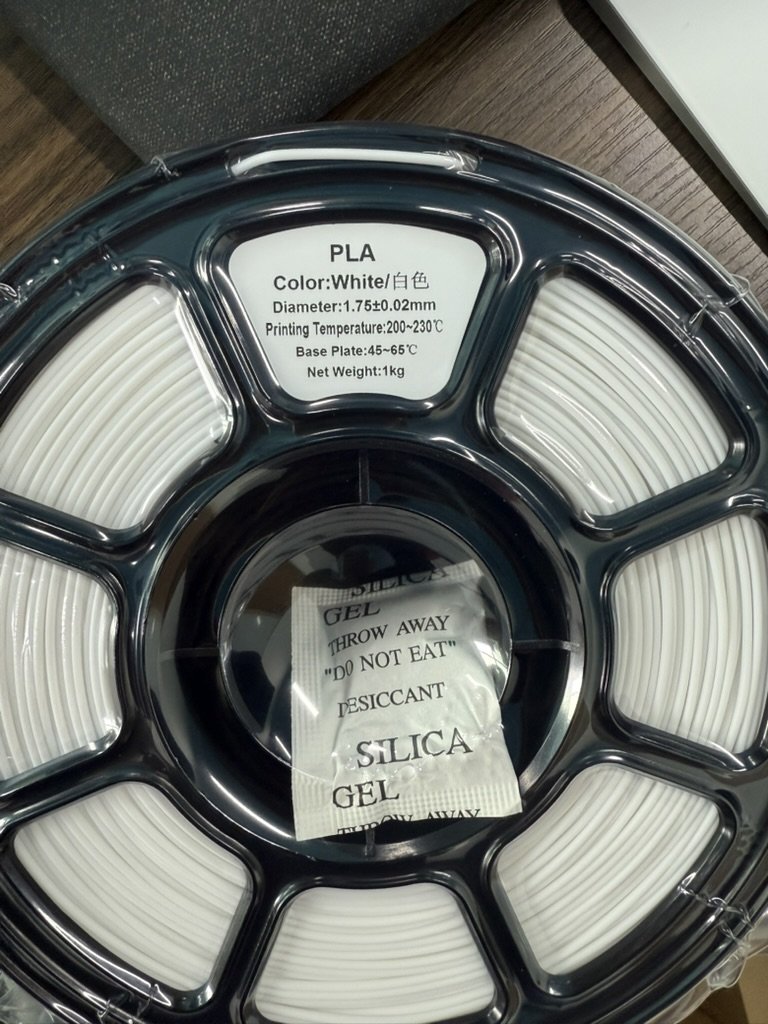
Every 1 kg spool ships boxed, with moisture protection and box format confirmed in the quote; export cartons hold 10 × 1 kg spools. The full carton math — dimensions, gross weight, pallet planning — is covered in How to Buy 3D Filament in Bulk. Diameter across the range is 1.75 mm (tolerance stated in the TDS).

How Do I Send the First Inquiry, and How Fast Will I Hear Back?
One form covers every path: the inquiry form on the contact page, with a task type selector so your request lands with the right context. Send material, volume, packaging and destination — four fields, no attachments needed on a first contact. A real person — not an autoresponder — replies within 12 hours with quote inputs or the questions that unblock them.
From there, lead time is confirmed per project after sample or artwork approval and payment; payment terms are stated in each quotation. If a supplier promises a fixed number of days before seeing your order, they have not checked their own line schedule.
What Documents Should Arrive With the First Order?
Four documents make a first order complete, and each one earns its place later: the commercial invoice and packing list, whose carton counts, dimensions and gross weights should match the quote you approved — customs and your warehouse both work from these; the technical data sheet for each material, so your support team answers customers from the same page the factory printed to; the batch quality document your quote specifies, so your incoming inspection has a baseline; and, on private-label orders, the artwork approval record so there is no argument about what “approved” meant. Ask for the document list in the quote stage. A supplier who describes these four without being prompted has shipped first orders before.
What If My Volume Is Below the MOQ?
Honest answer: the reference MOQ for standard colours is 50 kg (five 10 × 1 kg cartons), confirmed per project. If your monthly volume sits below it, two sensible paths exist. One, start with a paid sample evaluation against your current material, and place the first order when demand catches up — the sample fee can be credited against it as agreed in writing. Two, ask whether your mix of materials and colours can be combined into one order — the mixing policy is confirmed with the quote. What does not work is quietly hoping a factory bends a documented MOQ — programmes exist so both sides know the terms before feelings get involved.
True or False: First-Order Facts
True or False: You need finalized SKUs before asking for a quote.
False. A material range, volume and destination are enough. SKUs get locked after you see pricing and test samples.
True or False: Samples are free for all B2B buyers.
False. Samples are paid; the fee can be credited against a qualifying first order as agreed in writing. Sample shipping is usually paid by the buyer, adjustable case by case. Careful evaluation beats casual freebies.
True or False: The 10 kg carton means the MOQ is 10 kg.
False. 10 × 1 kg is the carton specification. The reference MOQ for standard colours is 50 kg — five export cartons — confirmed per project.
FAQ
What is the MOQ for a first filament order?
Reference MOQ is 50 kg for standard colours, 500 kg for custom packaging and 3,000 kg for custom colours, confirmed per project.
Are samples free?
No. Samples are paid; the fee can be credited against a qualifying first order as agreed in writing.
How fast will I get a reply?
Within 12 hours.
Conclusion
A first filament order is a shorter process than most buyers expect: three inputs, one form, a 12-hour reply, optional paid samples that offset the first order, and cartons whose dimensions you know before the quote arrives. The decisions that matter are the path — wholesale, label, or custom — and the MOQ tier it locks you into, and both are visible from day one.
Tell us the material, volume, packaging and destination — we reply within 12 hours. Reference MOQ from 100+ spools (≈100 kg) for standard colors.
Discuss Your Project